• The nearest houses
  • 79
  • (Route)(Route)
  • 81
  • 80 Hauptstraße 19

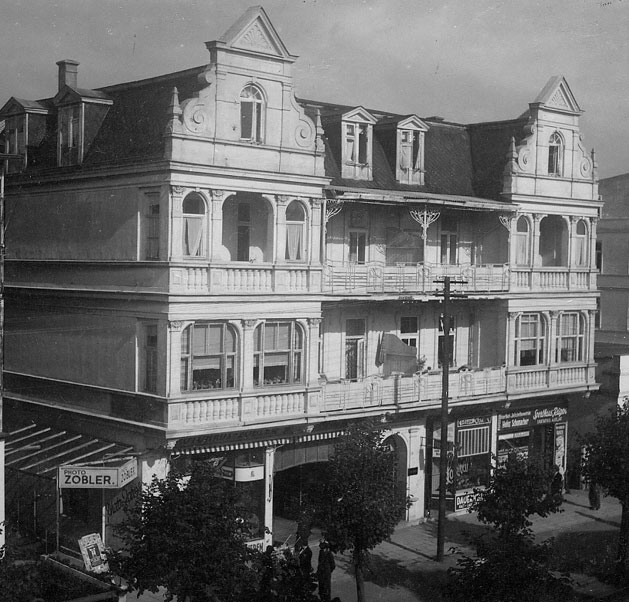
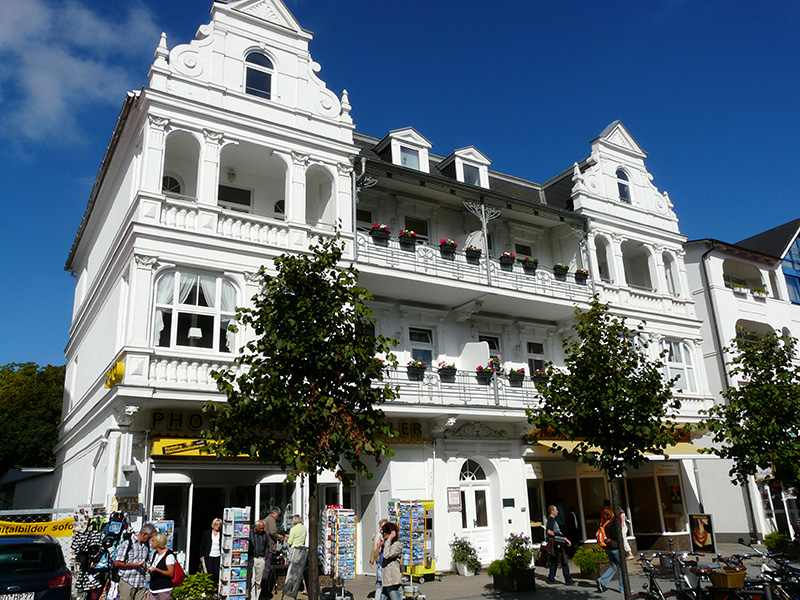
    Haus Zobler

    Previous house names: The house name “Zobler” has been retained since the opening until today. The prefix ‘villa’ or ‘house’ changed occasionally.

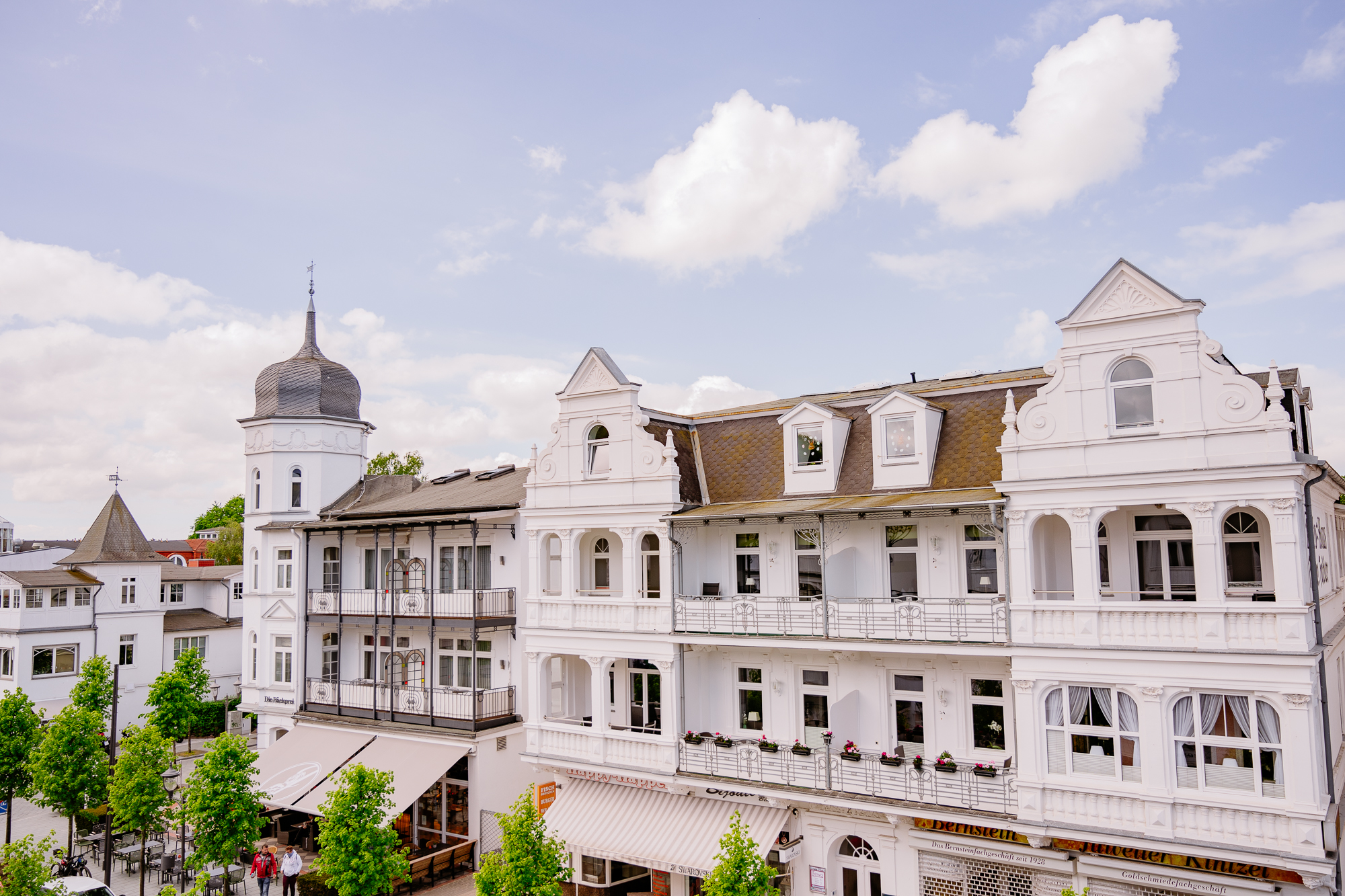
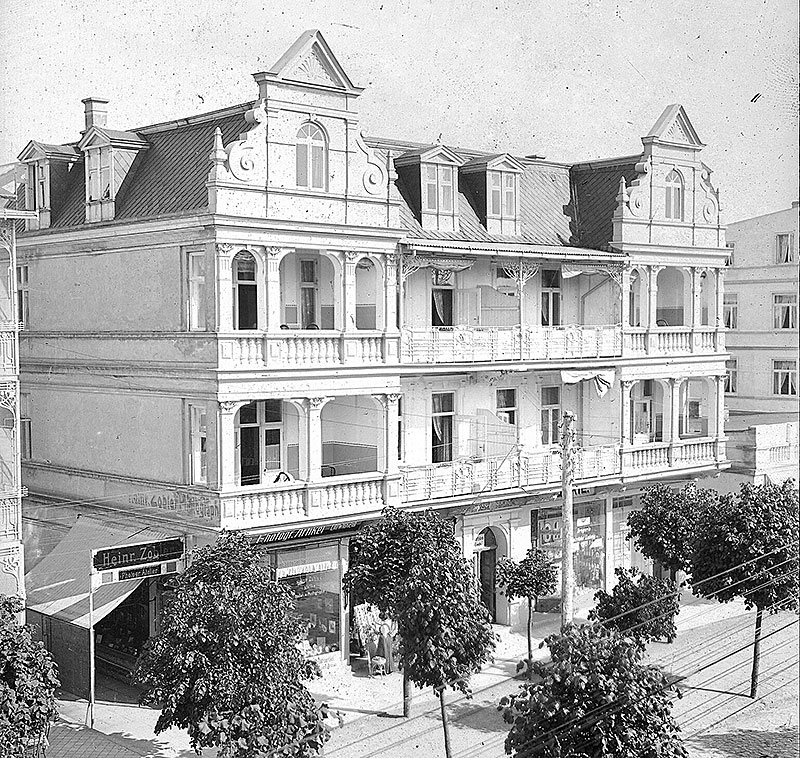
    Architecture: A large house with a symmetrically structured facade consisting of two volute gables connected by a metal balcony extension. The nine lion heads on the front façade are striking.

    Year of construction: 1903 or 1904

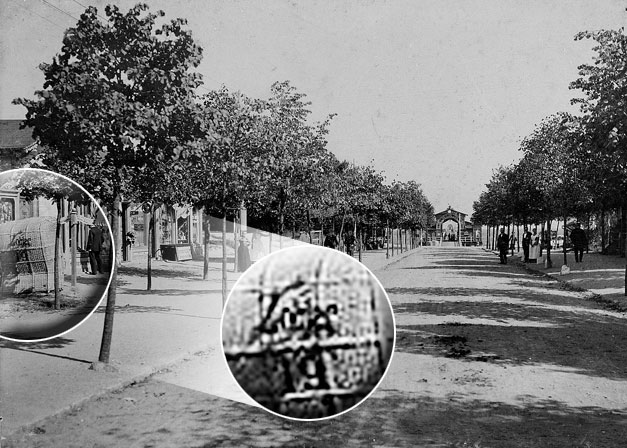
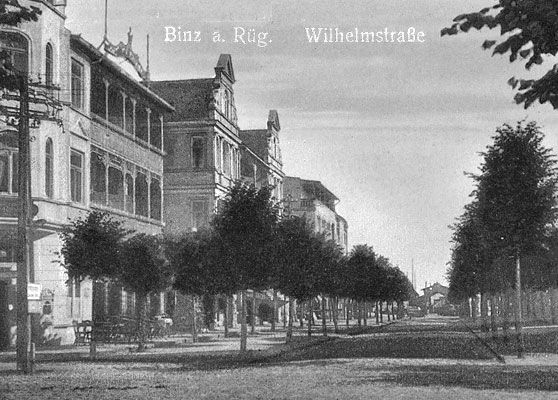
    History/owners until 1945: In 1896, Heinrich Zobler opened a studio for modern photography in Greifswald. In 1903, he had a low-rise building for shops constructed on Wilhelmstraße (now Hauptstraße) in Binz. As early as 1904, the building was extended to become “Villa Zobler” with 28 rooms for holiday guests. There were four shops on the ground floor. In addition to his own photography shop, there was a hairdressing salon, a jewelry and luxury goods store, and a drugstore. [Travel guide “Ostseebad Binz Insel Rügen das ‘nordische Sorrent’ 1911” (Binz Seaside Resort, Rügen Island, the “Nordic Sorrento” 1911) – published by the Binz Bathing Authority: Drugstore named Ladwig Brothers | In 1925, the Praktische Winke – Ostseebad Binz auf Rügen (Practical Tips – Baltic Sea Resort Binz on Rügen) states: Drugstore Ladwig Brothers Successors. Owner Reinhold Buchholz, Wilhelmstr. 12, telephone 33, close to the beach, Villa Zobler. Specialty store recommends Eau de Cologne, perfumes, large selection of soaps at original prices, as well as all other toiletries. — Dressings, sanitary napkins, bath sponges, rubber goods, — Mineral water, medicinal wines, brandy, liqueurs, nutritional supplements and tonics of all kinds. Medicinal drugs, tea, cocoa, chocolate. Specialty: toiletries. Toothbrushes, combs, fireworks]. The shops were only open during the summer season. The Zobler family lived in a wooden house on Sonnenstraße in the summer and moved to their heated home in Greifswald in the winter. In 1909, the photo shop in Greifswald was sold. The Zobler family moved to Binz and opened further branches in Göhren, Stralsund, and Binz.
    During the Nazi era, the regime used the holiday rooms in the summer for single, pregnant young women to recuperate. After the war, German ‘resettlers’ from the eastern territories came to live in the house. Some of them were large families who had to share a room, and some of them later became permanent tenants. The rent for one room was 10.15 marks, and the maximum rent for three rooms was set at 45.00 marks.

    GDR era: During the GDR era, the rooms were arbitrarily allocated to long-term tenants by the local authority without any renovation work being carried out. The balconies had to be provisionally closed off by the owner family in order to gain additional living space. Obtaining one’s own flat in one’s own house depended on the favour of individual decision-makers in the administration. The fact that the house was not expropriated during the ‘Aktion Rose’ campaign is solely due to the fact that the photographer was still needed to issue the relevant documents until the end and the campaign was abandoned shortly before the impending expropriation. The unheated rooms on the third floor (attic) were rented out to summer guests by Wismut (later by the FDGB). The maximum price per bed was 5.00 marks. Without any significant rental income, the owner family managed to regularly paint the house, one of the few houses in Binz to do so during this period, and otherwise keep it in good condition.

    After 1990: Since 1990, gradual renovations have been carried out in and around the building. Not only have the heating and sanitary facilities been modernised and expanded, but windows and doors have also been replaced, insulation optimised and historical elements restored. The use of the villa as an ‘office and apartment building’ in the years following German reunification was gradually returned to its original purpose, namely guest accommodation. In 2012, after extensive renovation, a lift was added with an additional staircase required for fire safety.
    The photo shop was run by the fourth generation until 2017 and was the second oldest in Germany at the time. The house is listed as a single building.

    Current use: Shops and bistro on the ground floor, holiday flats and the owners’ family flat on the upper floors

    Interesting facts/anecdotes: 1954, a defective electric boiler caused an explosion in what was then a hairdressing salon, resulting in one fatality. Over the years, the villa has also welcomed a number of celebrities as visitors. Rudi Carell, Didi Hallervorden, Walter Momper, Henry Maske and Max Giesinger have all been here.

    Photos: Photohaus Zobler, Binzer Bucht Tourismus/Christian Thiele

    Text: Zobler family, Klaus Boy